News & blogs

Filter the news by type

Communities Shaping Technology in the Silicon Savannah: Technology Assessment report, Kenya

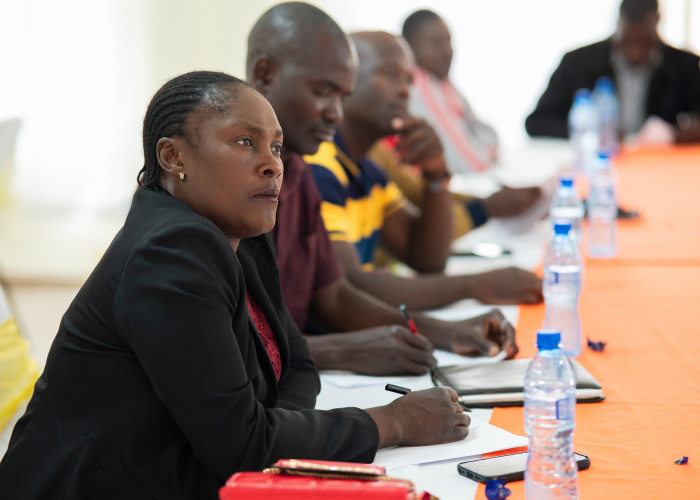
Digital Agriculture, AI, and Community Rights in Machakos County

Machakos County, Kenya
September 2026


Kenya has positioned itself as a leading hub for digital agriculture in Africa. Its robust connectivity, vibrant technology sector, widely known as the “Silicon Savannah”, and near-universal mobile money adoption have made it a testing ground for agricultural apps, digital credit, AI-assisted crop diagnostics, and national digital farmer registries. Yet the communities expected to benefit from these technologies are rarely asked whether they work, who they serve, or what they cost.

"This way, our knowledge is not lost." Technology Assessment report, Kenya

Digital Agriculture, AI and Community Rights in Siaya County

Siaya County, Kenya
September 2026


Siaya County, on the Kenyan shores of Lake Victoria, is a place where agriculture, forestry and fishing sustain most households, and where digital access has historically lagged far behind the national average. Yet digital agricultural tools are now arriving rapidly, through company field agents going door to door, NGO trainings, agro-dealers, neighbours, social media and app stores.

Beneath the Copper Belt: Technology Assessment report, Zambia

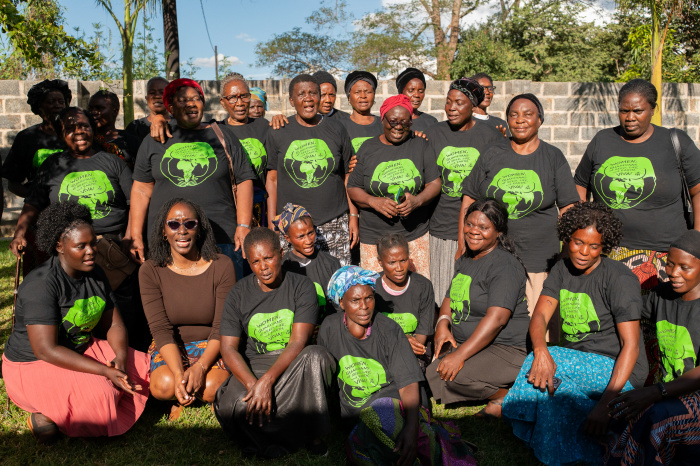
Digital Technology, AI, and Community Rights in Chingola District
Participants at Chingola technology assessment

Chingola District, Copperbelt Province, Zambia, 15–16 April 2026


Chingola District, in the Copperbelt District in Zambia, lies at the convergence of two of the most consequential global forces of the twenty-first century: the rapid expansion of digital technology and artificial intelligence (AI), and the accelerating extraction of critical minerals required to sustain that expansion. As global demand for these technologies intensifies, so does the pressure on the communities living above the ore deposits.

They claim it’s ‘climate action’, we call it ocean-grabbing

UK startup Seafields’ grand plans need exposing for what they are: a cynical greenwashing ploy that puts our oceans and our climate in jeopardy.
An artist's rendition of the impacts of industrial seaweed farming underwater.

Picture the scene: it’s late 2026 and you’re crossing the Atlantic Ocean. You gaze down at the sea lapping gently at the sides of your ship - but instead of clear seawater, you find that you are surrounded by invasive seaweed, stretching as far as the eye can see, in all directions. You’ve ventured into a vast Sargassum giga-farm, extending from horizon to horizon, covering an area the size of a country. 

Experts warn that Strait of Hormuz fertilizer and fuel blockage could lead to a global food crisis

One third of synthetic fertilizers and one quarter of the world’s seaborne oil trade pass through the Strait of Hormuz every day - two essential inputs for the industrial food chain.
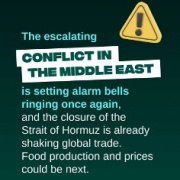
The escalating conflict in the Middle East is setting alarm bells ringing once again, and the closure of the Strait of Hormuz is already shaking global trade. Food production and prices could be next.


According to experts from ETC Group (Action Group on Erosion, Technology and Concentration), the commercial food model is so vulnerable that this blockage could drive up food prices, leading to a global food crisis. Researchers are therefore issuing an urgent call to strengthen local food systems based on food sovereignty and agroecology.

What does data justice mean for African small-holder farmers?

A critical analysis of biodigital technologies and their expanding role in food and agriculture. Central to the authors' argument is the question of who ultimately stands to benefit from this so-called “fourth agricultural revolution."
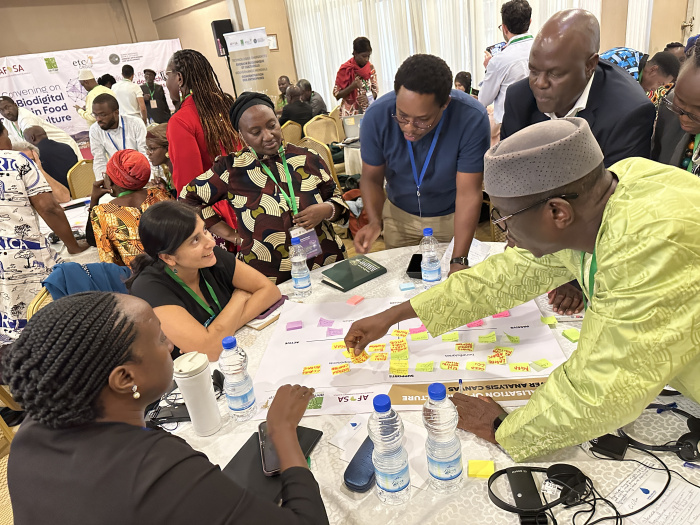
Participants engaging in the “Narratives of Power Building” session, exploring perceptions of technological power and progress in relation to Africa’s food systems

This article was written by Matthew Canfield, Sabrina Masinjila, Barbara Ntambirweki, and was originally published by Agroecology Now. Central to the authors' argument is the question of who ultimately stands to benefit from this so-called “fourth agricultural revolution.” They contend, first and foremost, that data justice must be grounded in the lived experiences and livelihoods of food producers.

Organizations denounce Carbon Markets ahead of COP30

55 movements and organizations from 14 Latin American and Caribbean countries published a powerful MANIFESTO rejecting carbon markets and defending territories against an avalanche of projects that are causing damage throughout the region

On October 29, 55 movements and organizations from 14 Latin American and Caribbean countries published a powerful MANIFESTO rejecting carbon markets and defending territories against an avalanche of projects that are causing damage throughout the region. This manifesto challenges COP30 of the UN Framework Convention on Climate Change (UNFCCC), which will begin in the first week of November with high-level meetings.

Pages

Subscribe to News & blogs